
New Jersey Uses the Superior Court
Many people search for a Gloucester County district court, but New Jersey does not have one at the state level. The state trial court is the Superior Court. It hears indictable criminal cases, major civil matters, divorce and family cases, foreclosure, general equity, and contested probate. Below it sit municipal courts for traffic and minor local matters.
Because the system is centralized, Gloucester court files live in statewide New Jersey Courts databases rather than a county-built system. The NJ Courts Find a Case index is the entry point for most case searches, which connects to the Gloucester County court records page.
This matters for searchers who expect a single county courthouse to hold everything. In Gloucester, the records are split by function. The Superior Court holds case files, the County Clerk holds land records, and the Surrogate holds probate. Understanding the Superior Court's place at the center of the trial system is the first step in finding the right record.
Gloucester County in Vicinage 15
Gloucester County belongs to the Cumberland/Gloucester/Salem Vicinage, also called Vicinage 15. The vicinage groups three counties under one judicial administration. NJ Courts lists Assignment Judge Benjamin C. Telsey and Trial Court Administrator Tina DiNicola for the vicinage. Office hours run Monday through Friday, 8:30 a.m. to 4:30 p.m., and the vicinage main number is 856-878-5050.
The vicinage structure is why a Gloucester case may be handled alongside Cumberland and Salem matters under shared leadership. The court locations themselves, though, are in Woodbury for Gloucester filings. The assignment judge oversees the trial courts in the vicinage, while the trial court administrator runs the day-to-day operations. Jury reporting, interpreter requests, and scheduling all flow through this vicinage office rather than a separate county court office.
The Old Courthouse and Justice Complex
Gloucester County's Superior Court functions run from two main Woodbury buildings. The Old Courthouse at 1 North Broad Street is a historic court location and the site of sheriff's sales. The Justice Complex at 70 Hunter Street houses justice and law-enforcement offices, including the Sheriff, Corrections, and the Prosecutor.
Both buildings are reachable through the vicinage number. The Surrogate's Court and County Clerk sit nearby on Broad Street, which keeps most court business within a few blocks. The Sheriff's Court Security Bureau provides security for the Old Court House, the Justice Complex, the Family Court Building, and the probation offices, so expect screening at entry.
Gloucester County Court Contact Table
Several offices share the county's court work, each at its own address. The table lists the main courts and offices, where they sit, and how to reach them.
| Court / Office | Address | Phone |
|---|---|---|
| Superior Court, Old Courthouse | 1 North Broad Street, Woodbury | 856-878-5050 |
| Superior Court, Justice Complex | 70 Hunter Street, Woodbury | 856-878-5050 |
| Chancery Division, Probate Part | 19 N. Broad Street, Courtroom 203, Woodbury | 856-878-5050 |
| Surrogate's Court | 17 N. Broad Street, Woodbury | 856-853-3282 |
| County Clerk | 1 N. Broad Street, Woodbury | 856-853-3237 |
| Prosecutor's Office | 70 Hunter Street, Woodbury | 856-384-5500 |
Superior Court Divisions
The Superior Court splits into divisions that handle different work. The Law Division takes criminal cases and major civil matters, plus the Special Civil Part, small claims, and landlord-tenant cases. The Chancery Division handles family, general equity, and probate litigation through the Probate Part.
Each division produces its own records and dockets. The list below sorts the main divisions and what they hear.
- Law Division, Criminal: indictable offenses tried in Superior Court.
- Law Division, Civil: major civil suits, special civil, small claims, landlord-tenant.
- Chancery, Family Part: divorce, custody, support, and domestic violence.
- Chancery, General Equity: injunctions and equity matters.
- Chancery, Probate Part: contested probate and guardianship.
Municipal Courts in Gloucester County
Municipal courts are the lower courts below the Superior Court. They handle traffic tickets, parking, local ordinance violations, disorderly persons offenses, and other limited matters across the county's towns. These are the front-line courts most residents encounter. Traffic and parking matters are searched through NJMCDirect, covered on the traffic court records page.
A municipal case can move up if it involves a more serious charge, which is then handled in the Superior Court. So the two levels work together within the same statewide system. Each town in Gloucester County has its own municipal court, but they all follow the same statewide rules and use the same online tools for tickets and payments.
Superior Court vs Municipal Court
The clearest way to understand Gloucester's court levels is to compare them side by side. The Superior Court handles serious and major cases. The municipal court handles local, limited matters. The table lays out the difference.
| Feature | Superior Court | Municipal Court |
|---|---|---|
| Level | State trial court | Local limited court |
| Criminal | Indictable offenses | Disorderly persons, ordinances |
| Civil | Major civil, family, equity | None of the major civil docket |
| Traffic | Not handled | Traffic and parking tickets |
| Search | NJ Courts case tools | NJMCDirect |
Appellate Division and Supreme Court
Appeals from Gloucester Superior Court trial divisions go to the Superior Court, Appellate Division. The Appellate Division is the state's intermediate appeals court, and it also reviews Tax Court and many state agency decisions. From there, discretionary review can proceed to the New Jersey Supreme Court, the state court of last resort.
The Tax Court is a separate statewide specialty court for state tax and local property tax disputes. A property tax appeal in Gloucester follows that track rather than the regular civil docket, and its cases have their own NJ Courts search tool.
How a Case Moves Through the System
A case follows a clear path up the court ladder. The flow depends on whether it starts in municipal court or the Superior Court, but appeals always rise toward the top.
Case flow: Municipal Court › Superior Court › Appellate Division › New Jersey Supreme Court
A traffic or minor matter starts in municipal court. A serious crime or major civil case starts in the Superior Court. If a party appeals, the case moves to the Appellate Division, and only a small share reach the Supreme Court. Knowing the path tells you which court holds a record at each stage. A case that ends at the trial level leaves its full record in the Superior Court, while an appealed case spawns a second record set in the Appellate Division.
Tax Court and Federal Courts
Federal cases from Gloucester County are not part of the state Superior Court. They are filed in the U.S. District Court for the District of New Jersey and accessed through PACER. Federal matters include federal crimes, civil rights suits, federal-question and diversity civil cases, and federal habeas petitions.
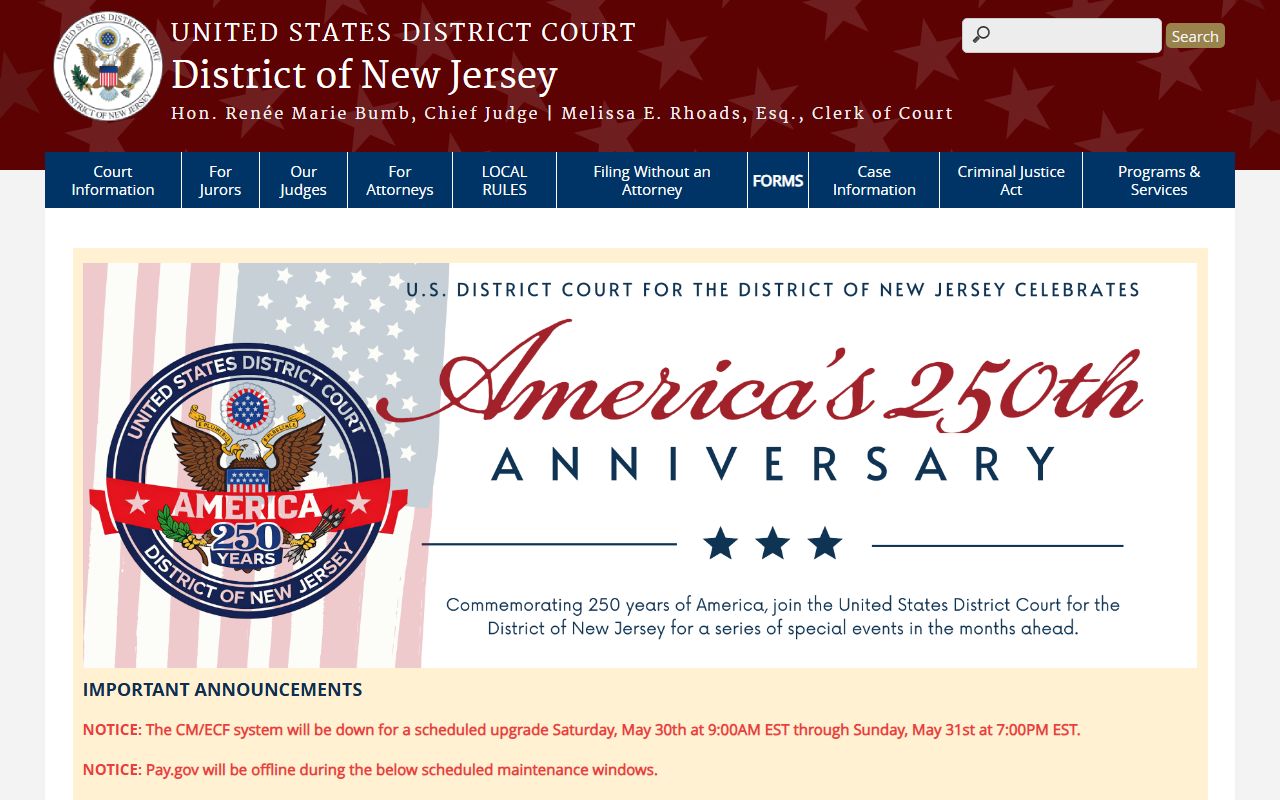
The official site is the U.S. District Court for the District of New Jersey. Bankruptcy is handled separately by the U.S. Bankruptcy Court for the District of New Jersey.
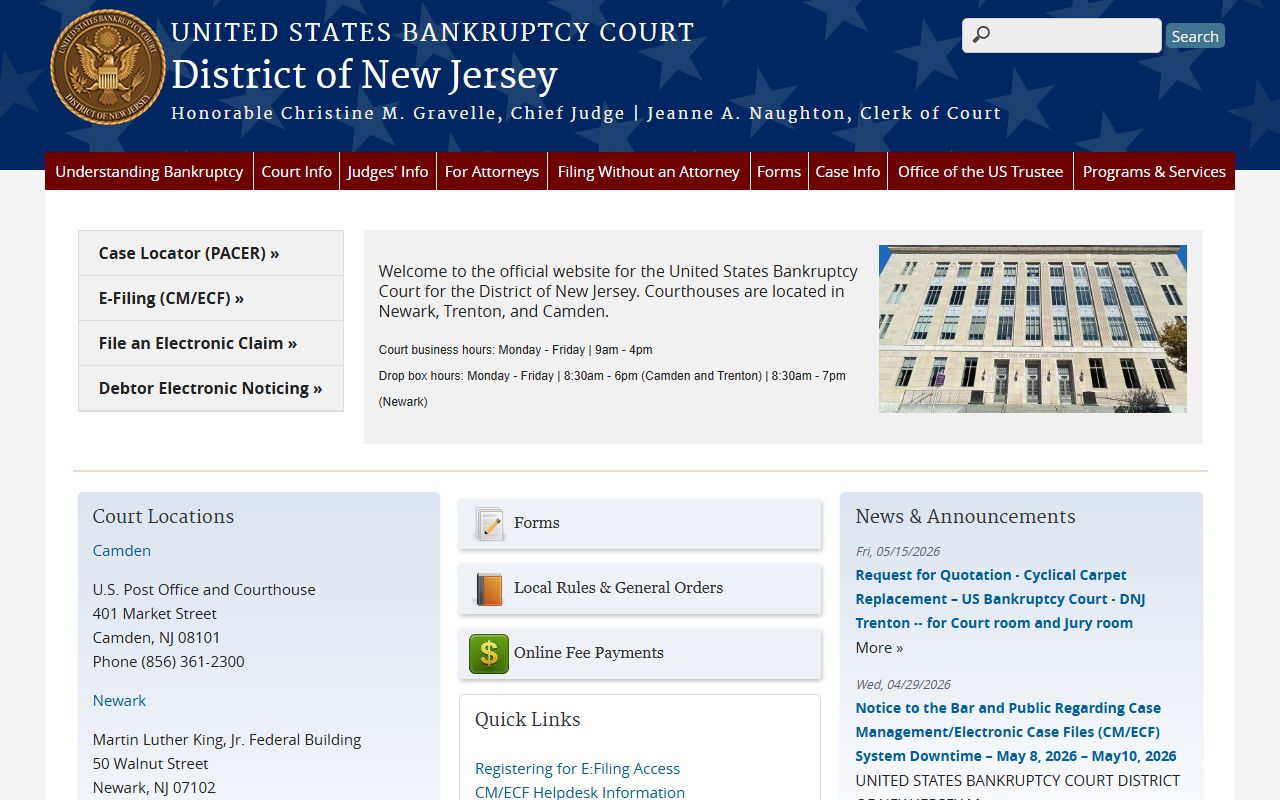
Bankruptcy records, including Chapter 7 and Chapter 13 cases, are reached through the U.S. Bankruptcy Court for the District of New Jersey. Federal appeals go to the Third Circuit.
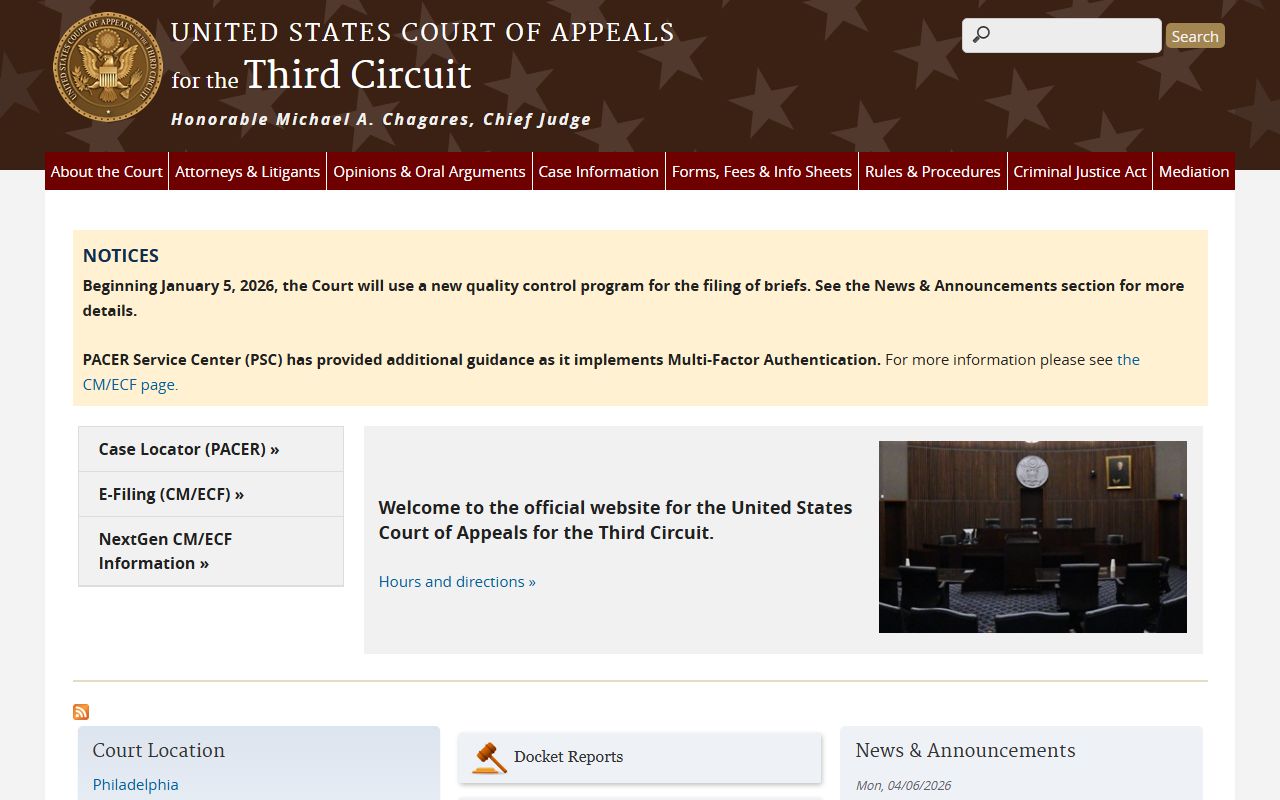
Appeals from the District of New Jersey go to the U.S. Court of Appeals for the Third Circuit. Official federal dockets are reached through PACER.
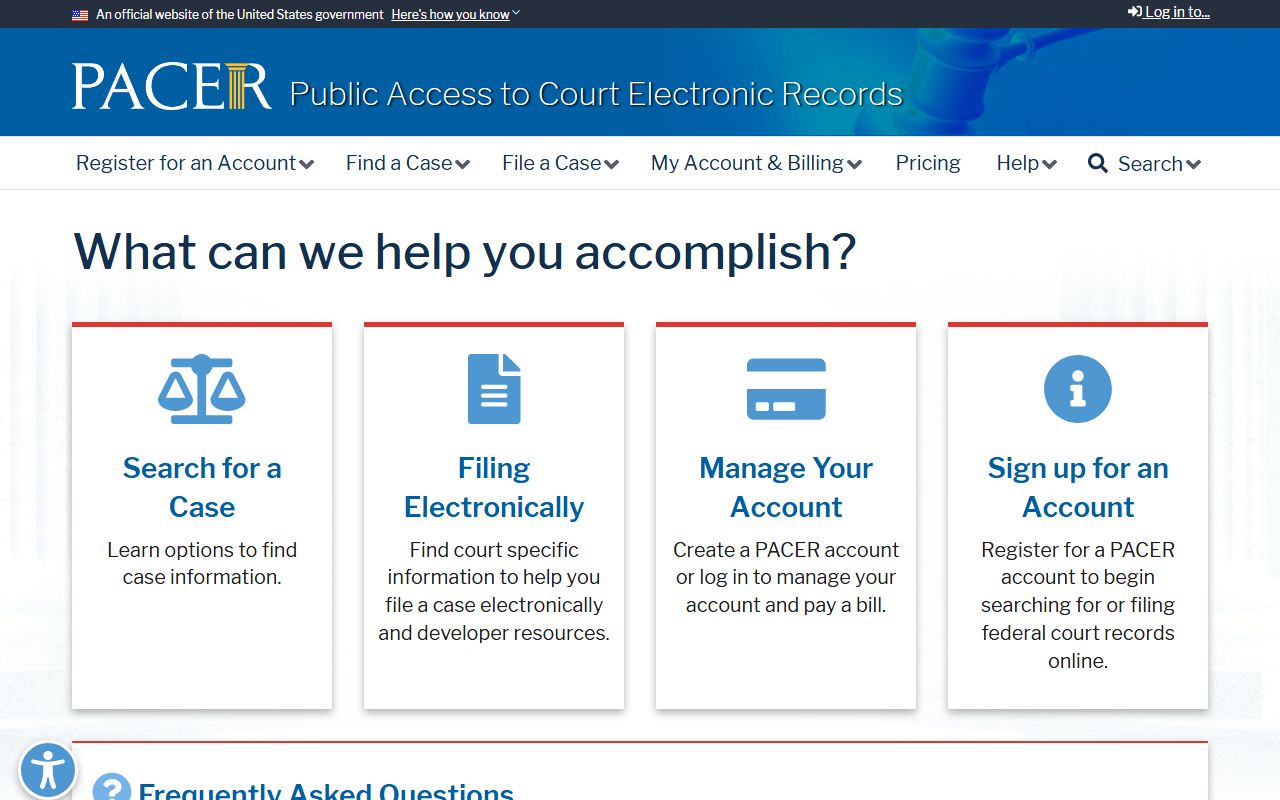
You register and log in at PACER to view many federal dockets and documents. Federal prosecutions in the district are handled by the U.S. Attorney's Office.
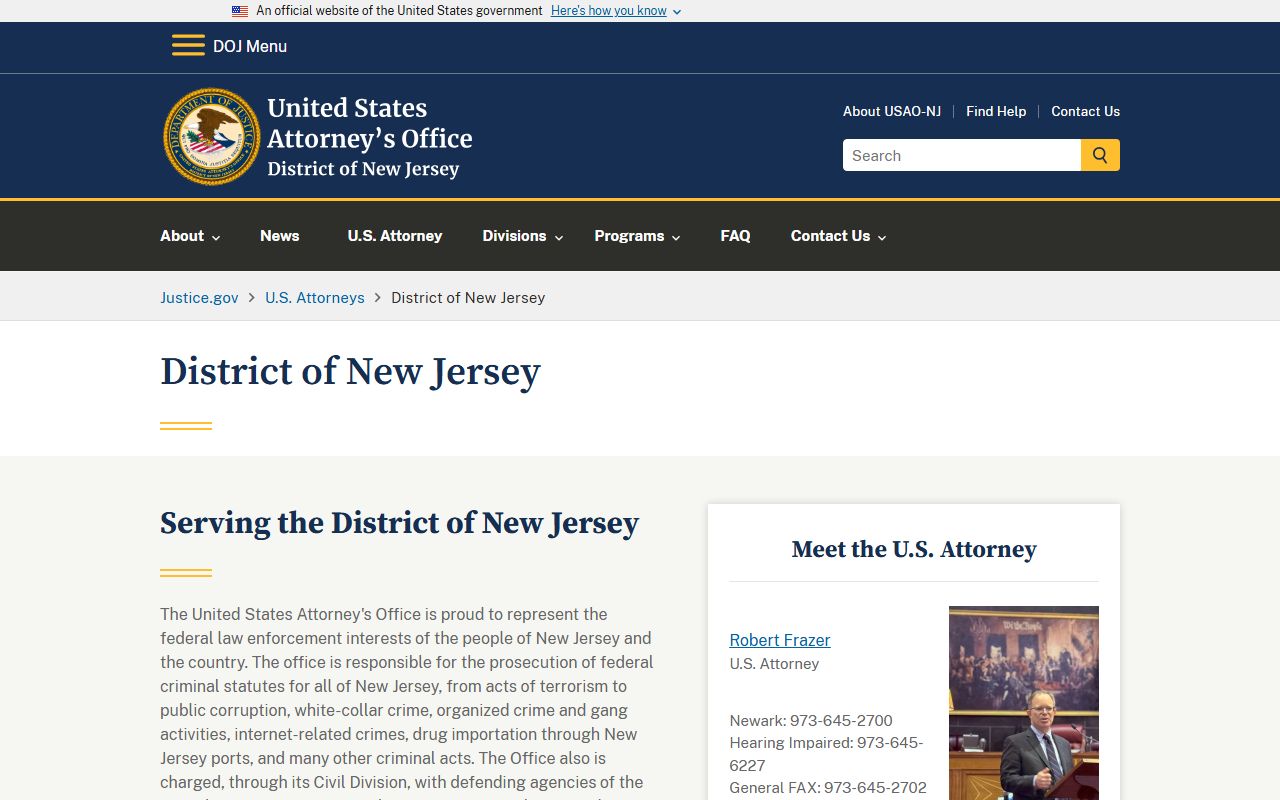
The U.S. Attorney's Office for the District of New Jersey prosecutes federal crimes from the county. Federal records sit apart from NJ Courts and the county system.